Showing posts with label guide books. Show all posts

Saturday, August 10, 2013

Review: The Warbler Guide

During a quick trip to my local birding store, the Warbler Guide by Stephenson and Whittle caught my eye.  The temptation was great and as I wavered, the store owner said, "Trust me" and so I did.  Let me say first off that this book is truly an excellent guide to the world of warblers.  As a beginning birder, warblers to me were prized jewels of the sky.  They were small, colorful, and musical.  A stark contrast from the waterfall I had grown used to seeing in the fall and winter.  There is also this also mystical/ephemeral quality to them given there strategy of migration.  These make the warblers a special family of birds for me.

The Warbler Guide meets the need of several different kinds of birders.  While being a good introduction and resource on Warblers, this Book is also pushes you to be a better birder.  The myriad of photos, comparisons with other like birds, and the song vocalizations make this book an good one.  I've hardly put the book down since I've picked it up.  Stephenson and Whittle should be proud of the book they've created and certainly have done a great job in helping beginning birders get a better handle on Warblers.

I've included a picture of the cover, their quick guide to faces, a sample song vocalization page, and a link to their webpage.  Princeton UP also has a good page for the book up and running.  Any birder, Warbler-lover, or Nature enthusiast would do well to add this book to their collection!


The Song Vocalization of a Blackburian Warbler

A Sample of the Quick Finder Guides produced by The Warbler Guide

All images are (C) of Princeton UP, Tom Stephenson and Scott Whittle

For more information about The Warbler Guide - Click Here

Coming Soon: Birding in Dixie!

Tuesday, July 2, 2013

A Day in a Saltmarsh

Salt marshes are amazing habitats.  I am lucky to live in state with some great Salt Marshes.  Salt marshes are among the most diverse and unique ecosystems on the planet.  In fact, in terms of biodiversity, they are second only to rain forests.  I often visit some of my local salt marshes to get a good perspective on the life that exists there and the limited geographic space they inhabit.  Seeing a Salt Marsh is a wonderful ecosystem to see.  Obviously there are countless books on the subject and there are some very serious concerns for this ecosystem.  Over 70% of Earth's population lives near the coast, this puts a tremendous amount of pressure on our shorelines and we need to be conscious of this as these are some of the most productive and valuable ecosystems our planet has.

The other day I took a hike through a salt marsh and while I found many birds, I was most excited by the Saltmarsh Sparrows and Seaside Sparrows that I found.  They live in these environments among the reeds.  Birding in these environments is such a joy to behold and witness as thousands of different niches are being filled and exploited by thousands of different animals and species.  Besides the Saltmarsh Sparrow, the other highlight was seeing a young Willet, Willetlet(?), bouncing around the marsh.  I hope to go back soon and check in on these birds and their habitat.  Meanwhile, there are lots of salt marshes to check out and I insist you go out and see some!

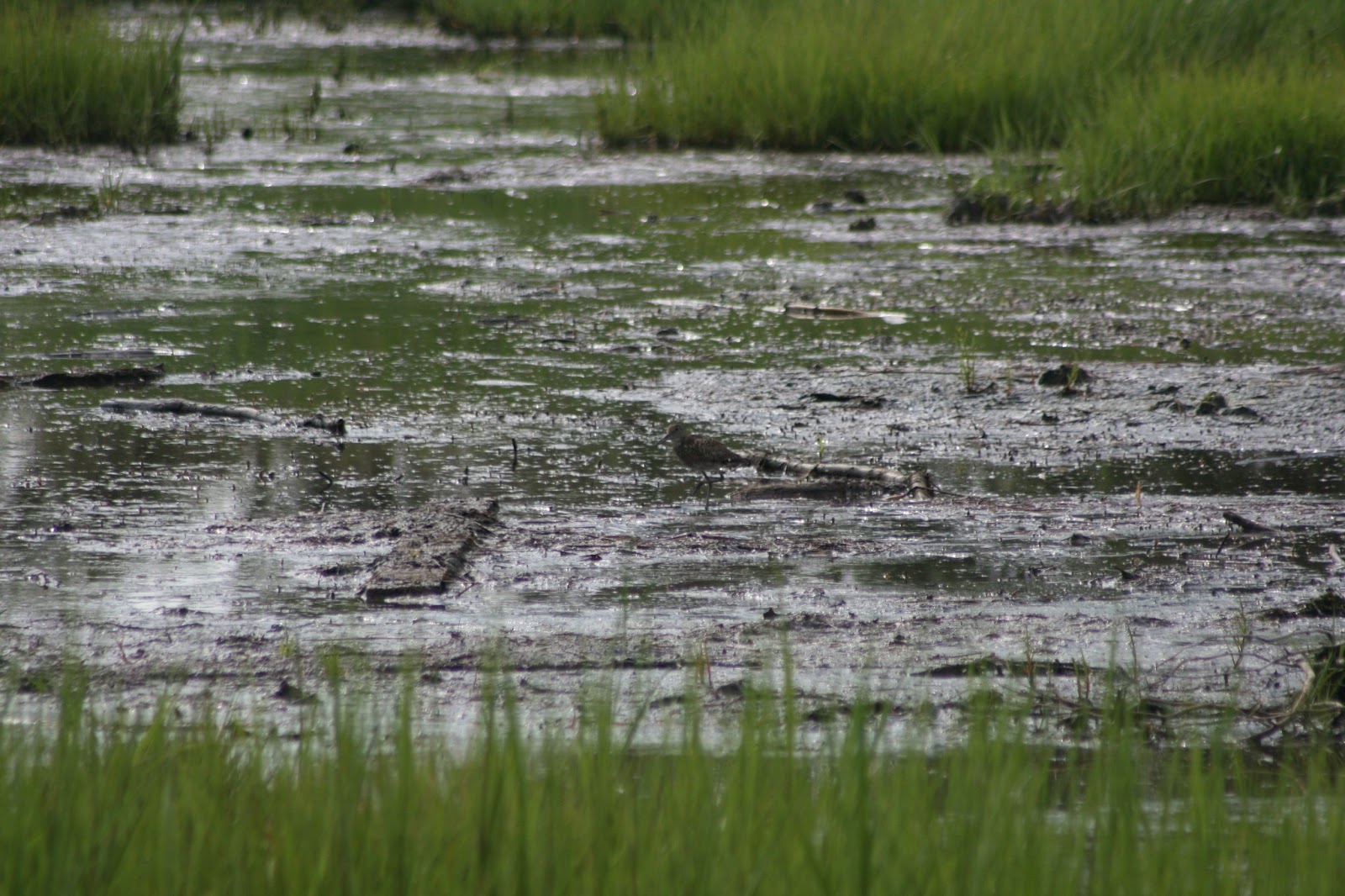
A Willet
A Juvenile Willet
Osprey
Saltmarsh Sparrow
2013 Year List: 231
Saltmarsh Sparrow
Seaside Sparrow
Boat-Tailed Grackle

Sunday, December 2, 2012

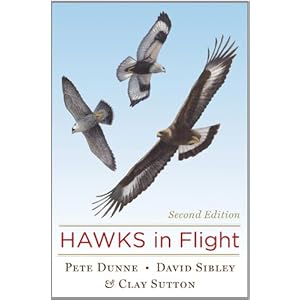
Book Review: Hawks in Flight


Due to a few work and home projects, I couldn't make it out to see the birds.  So for this week, I want to write a review of the latest birding book I picked up.  Dunne, Sibley and Sutton's book does a great job of outlining the challenges and pitfalls of identifying Hawks in Flight.  From regional differences to the challenges created by color morphs, Hawks in Flight outlines a lot of the forms that you can see out in nature.  One the things that I really an enjoying about this book is the fact that it places photos side by side to help you see how the different forms and the different birds look in the wild.  I've included a photo below so you can see how the pages look yourself.

This book is top quality how serves a very niche utility.  During Hawk Migration in the Fall, this book, cannot be replaced as a helpful guide.  I only real complaint is nullified by the point of this guide.  I love looking and learning about birds in their habitat and seeing multiple pictures of them.  This book is meant to guide the hawk watchers and counters who spend hours looking up at the sky.  While this book caters to them and their needs, it is still worth your while to pick up this book and marvel at the pages, photos and informations that fill its pages!

Hawks in Flight: Second Edition
From Amazon.com and (c) of Houghton Mifflin Publishers


Some Sample Photo Comparions of a Red-Tailed hawk,  (c) to the Authors!

Tuesday, March 27, 2012

Richard Crossley ID Guide - Eastern Birds Review


So at the COA Meeting, I heard Richard Crossley and picked up a copy of his guide book. A couple of quick comments. The images showcase the greatest feature of the Crossley ID Guide.  The Image layouts really create a great and diverse way to look and learned to look at birds.  While I am still browsing the book, the images do a great job at not only showing you what the bird looks like, it shows you how to for birds.  The Woodpecker and Rail pages do a good job of teaching illustrating how difficult it can be to find the bird in its environs.  I do appreciate this aspect of the book highly.  The images are vivid, realistic and helpful for learning how to look at and for birds.  One Critique is that I want more pages that help birders distinguish between similar species of birds.  A few books do shared image and written comparisons of like birds and I think Crossley's new format could do a great job illustrating how different the birds are.  Another critique is that currently the book is HUGE.  In order to accommodate the various layouts, this was a necessity, but a pocket guide would be helpful.  Crossley ID Guides is promising more innovative guides and improvements and I hope that a portable field guide is on the docket.


Here are a couple of his pages and layouts:

All Images Belong to Crossley ID and Princeton UP (C) are not MINE!

Sunday, March 25, 2012

Some Great Birds and A Birding Conference

So a couple of great birding outings this weekend. Friday, I returned to the spot where I saw the Piping Plover to see what I could. I decided to stop by and see the marsh before going to look at the beach. While setting up my scope and looking around at all the Wigeons and Green-Winged Teals, I spotted a small duck moving around. It was a Blue-Wing Teal male and female! A new Life bird for me! There are beautiful birds. I followed them for about half an hour as they swam, dabbled and poked around the mud. While doing that, I saw some Osprey Building a Nest, 2 Snowy Egrets hunting in some tall spartina grass and tons of green-winged teals and American Wigeons. While the last 2 weren't new year or life birds for me, it was a great exercise to study birds and look at the birds around me.

On another note, I went to the Connecticut Ornithological Association Annual Meeting this weekend as well. I saw a couple of great speakers, Alvaro Jaramillo and Richard Crossley and I've added some information below. I got a copy of Crossley's Guide and I will be posting a review later in the week. In the end it was a great week to be a birder and I hope to continue having weeks like this!

Alvaro Jaramillo:
http://alvarosadventures.com/
http://www.youtube.com/watch?v=fTPZqMjm_Vg

Richard Crossley:
http://www.crossleybooks.com/
http://www.youtube.com/watch?v=zrKrleEQRMQ

Outing #23
Blue-Winged Teal LB (Life List is at 139)
Osprey
Snowy Egret

2012 Total: 103