Tuesday, April 28, 2015

Contrast Contrast

Having heard the Warbler Guide authors speak at the Connecticut Ornithological Association Annual Meeting, I was curious about how contrast works for our feathered friends.  I was struck how even birds with similar colors might have very different looks.  Think about a Black-and-White Warbler and compare it to an Eastern Kingbird.  Both have the same color scheme yet, both use those colors in different ways.  Looking at things like contrast can help us see our feathered friends in a better light.  For the birds, Contrast can help them blend in or stand out for a mate.  For the Black-and-White, contrast helps it blend in with the bark that it likes to shadow.  For the Kingbird, the contrast might help shield it in the fields and ponds that it haunts. For added measures, the Yellow-Throated Warbler shows a great deal of contrast with three colors.  Clearly an effort to impress other warblers with its colors. 


Here are two black and white birds side by side.  Can you see the difference in contrast between the two birds?

Another warbler for added contrast

How are you seeing contrast in your birds?  What's your favorite?

The Warbler Guide - Link here

Wild Bird Wednesday - Link here

Tuesday, April 21, 2015

ABA Bird of the Year: Green Heron

The Green Heron is this year's ABA Bird of the Year and was announced in both English and Spanish posts by the ABA.  To me, the bird chosen was a homerun, Green Heron's are beautiful and smart birds that fun to watch and observe.  The fact that the announcement was in Spanish meant a lot to me as well on a variety of levels.

Any attempt to reach out to underrepresented groups means a lot to me and when its my own group, I have a strong investment in those efforts.  Reaching out to Latino communities can really provide a lot to the birding community across North America.  If for no other reason that our beloved birds need help with conservation across Latin America and having a strong Latino community in the US will help those efforts.  Another blogger/birder post about the rules for the Black Birder has made quite a stir in some birding circles and has been ignored in others.  Its hard to see how our social issues affect our feathered friends, but its clear to me that if we don't reach out to new groups and new birders, our society will be poorer for it and our birds will lose human defenders.  For these reasons, I hope we can all agree that while a good birder is a good birder, we'll all be better birders if there are more of us around.  Until the next time... get out and go birding!


A Green Heron on a muddy bank

He was hoping I didn't see him

Wild Bird Wednesday - Link here

Green Heron @ All About Birds - Link here

2015 Bird of the Year - Link here

Tuesday, April 14, 2015

She sells Shorebirds

If you love shorebirds, the above picture can be very exciting to you!

Like most birders, I've been working on learning more and more about the different ways to distinguish shorebirds.  Going to the Georgia coast is a great opportunity to study shorebirds and other coastal birds.  Along with some great views of birds, I got a life bird and a life subspecies.

Western Willet (subspecies)

While the Willet currently remains as one species, there is evidences that there is very little overlap between the Eastern and Western Populations and they do live in very different habitants and regions throughout their life cycle.  Eastern Willets winters in South America and breeds on the Atlantic Coast.  The Western Willets, seen above, winter on the Gulf Coast and some on the south North Atlantic coasts and Breed in the plains of the West.  This makes these two subspecies very different from each other.  

The Willet @ All About Birds - Link here

Comparing the Songs of the Willet Subspecies @ Sibley Guides - Link here

Whimbrel - a Lifer for me

This Whimbrel was a life bird for me.  I seemed to always dip out on these guys in Connecticut, but at the Bloody Marsh in St. Simon's Georiga, I got lucky!  This guy was very affable and was even hunting around and eating a bunch while I watched him.  His distinctive beak made him easy to spot out along with the fact that the other birds there were Least Sandpipers and Killdeer.  He stuck out like a sore thumb!

The Whimbrel @ All About Birds - Link here

wWild Bird Wednesday - link here


Tuesday, April 7, 2015

LIL Birding

When a Little Gull (LIGU) showed up on Lake Lanier, I couldn't help myself and I when to chase the bird.  Not that this was a life bird for me, it would've been a great state bird.  While Georgia has no natural lakes, there are great number of man-made lakes from a number of dams across the state.  Recently, due to the work and observation of a many birders across the states, there have been many birds found that probably would be expected at the shore but not an inland lake.  But these lakes are huge and some call it "inland sea effect" like what occurs on the Great Lakes.

The birds see these large lakes and find some similarity with their traditional habitats.  Since we are fairly far the coast, some birds might appreciate the benefits of the large inland lake.  The Bonaparte's Gulls, Horned Grebes, and even some Common Loons, are great evidence of this.

What are some unexpected places you like to find birds?

Horned Grebe

Bonaparte's Gull

...with a fish!

Bonaparte's Gull - Link here

Horned Grebe - Link here

Wild Bird Wednesday - Link here

Tuesday, March 31, 2015

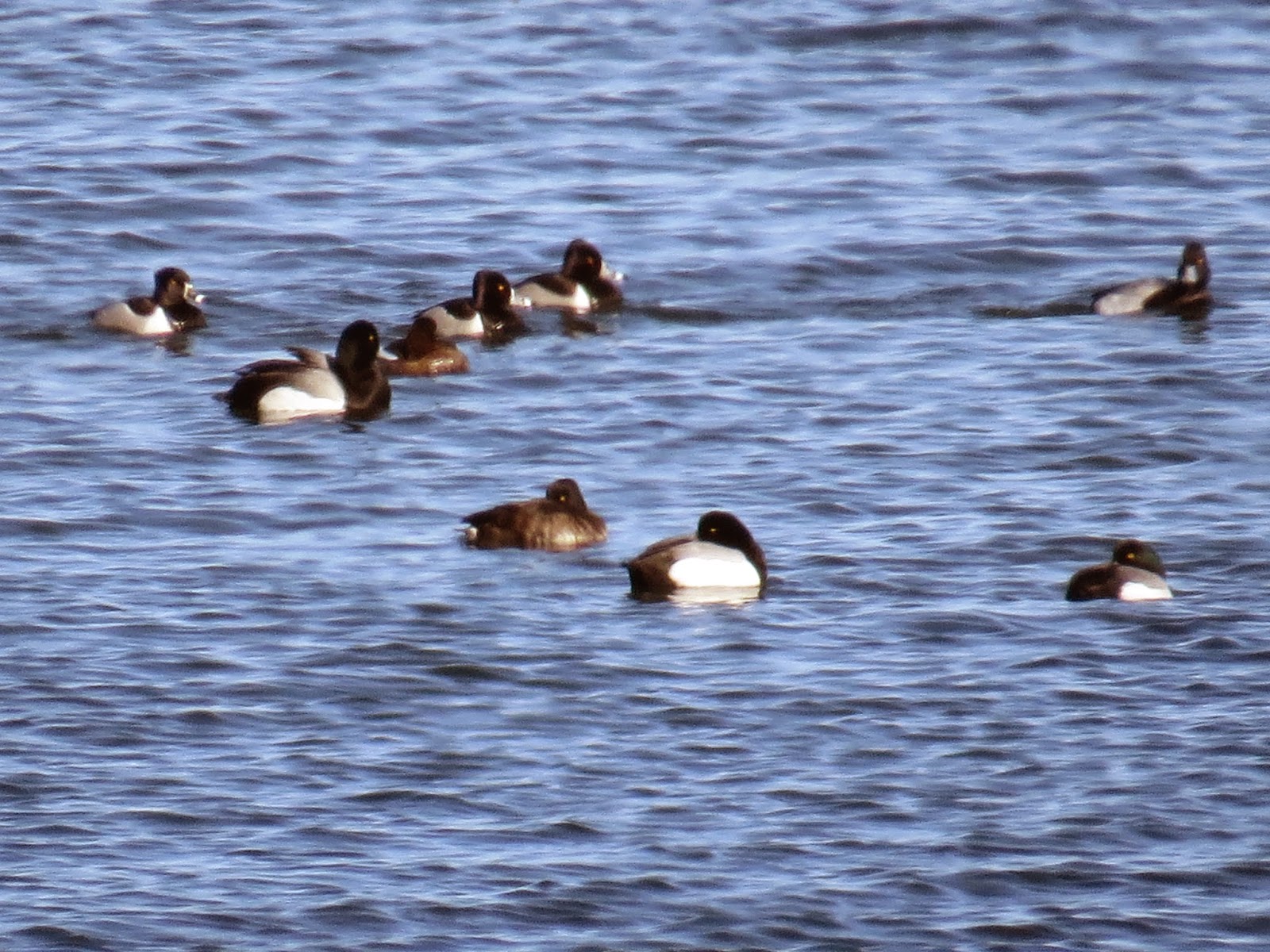
Tufted Duck

Whenever I get an ABA Rarity pops up, there's an itch that comes across every birder.  Can I fly to <wherever> to get <rarebird>? Do I have the time/resources/ability?  I was lucky that when I planned to return to Connecticut for the COA Annual Meetings (www.ctbirding.org) I hoped that a Tufted Duck that showed up in Bridgeport would stick around.  Happily, it did!

For me, the Tufted Duck was a life bird and one that while very common in the UK and other parts of the world, is not very common in the US.  Every year a few manage to show up across the Northeast and the Canadian Maritimes.  One had not been in CT for about 15 years so add this bird to my CT List was a great addition.  Finding rarities like this would not be possible without dedicate birders, ebird, and more dedicated birders who work at checking in on the bird and reporting its presence or not.  I know that I have to get better about reporting success and failures beyond ebird (www.ebird.org)

A Female Tufted Duck


Info on the Tufted Duck

Wild Bird Wednesday - Link here

Tuesday, March 24, 2015

Duck Duck Goose

Moving to the south, I thought that I would be missing out on a lot of the goose that usually occur up North.  I am to report that Georgia has had all but one of the geese I got last year, the Barnacle Goose.  For many years, the barnie was my nemesis and evaded me and every corner.  But this year, I evaded it.  I also traded Barnie for a Ross's Goose.  Ross's was new for me last year and is definitely a welcome addition to my goose repertoire.  Barnie and the elusive Pink-footed goose might be long shots down here in the South, but you never know.

Canada Geese and some Cackling Geese

A Canada Goose and a Snow Goose

A Canada Goose and a Greater White Fronted Goose

Wild Bird Wednesday - Link here

Wednesday, March 18, 2015

Birding: The Next Generation

My daughter is still new, but she's opening my eyes to a whole new world.  She's already got some descent birding skills.  She's already found a bird before me and she's got really sharp ears.  She's already found a few birds before me and I can't wait to see how she develops as a birder/naturalist/learner.

I've posted some pictures that we've taken together.  She looks to watch birds at the feeder and tries to talk to them.  We'll work on that though.  I've always enjoyed sharing birding with new people but I suspect that sharing the field and the art of birding with my daughter for the rest of our lives will be one of the most enjoyable things.

Enjoy some of the pictures we've taken together!

Yellow-Rumped Warbler or as she calls them.... oooohhahahhh

Hermit Thrush or ppphhhhh!

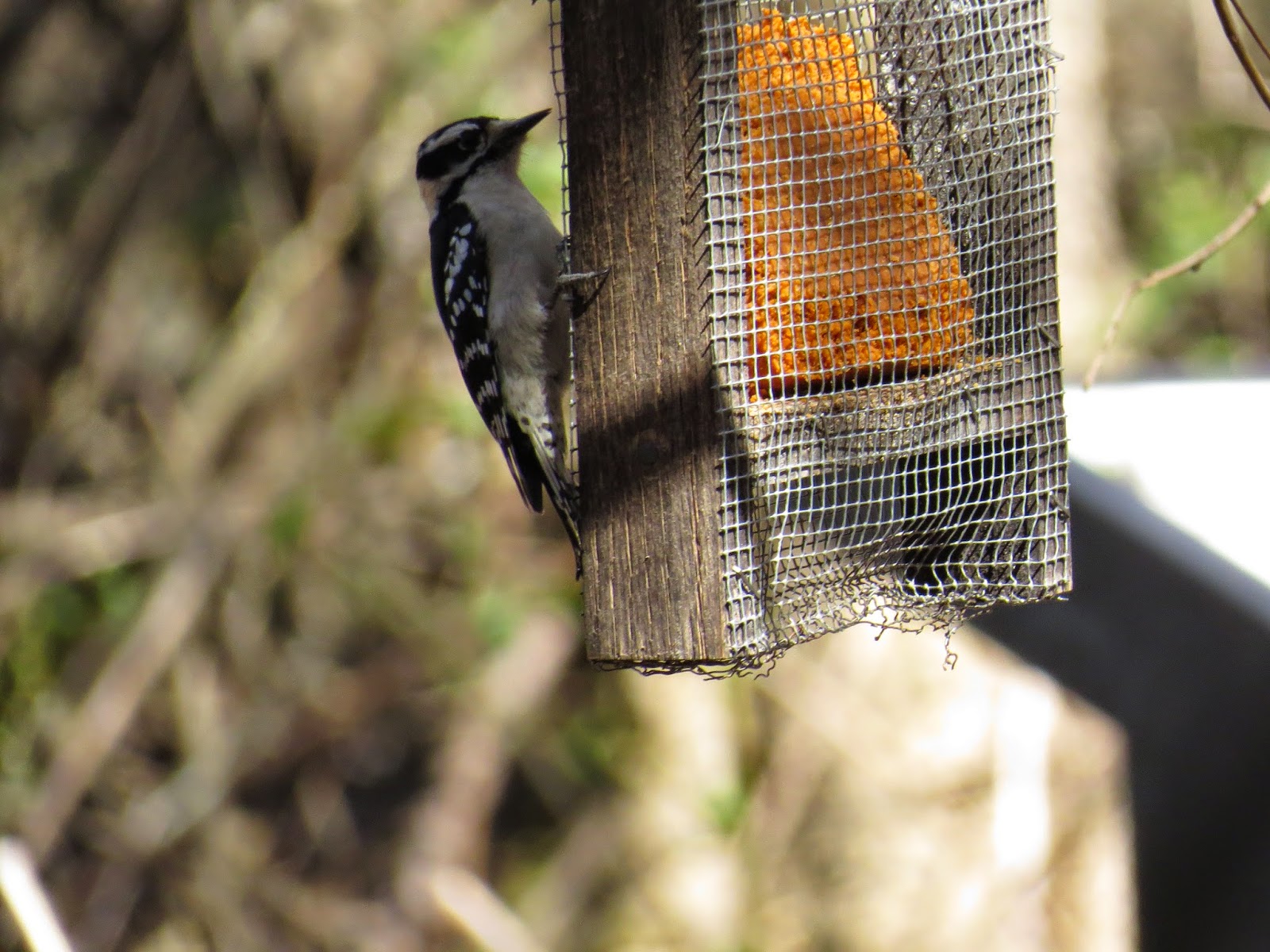
Downy Woodpecker or AAK! AAK! AAK!

Wild Bird Wednesday - Link here