Showing posts with label life birds. Show all posts

Tuesday, April 14, 2015

She sells Shorebirds

If you love shorebirds, the above picture can be very exciting to you!

Like most birders, I've been working on learning more and more about the different ways to distinguish shorebirds.  Going to the Georgia coast is a great opportunity to study shorebirds and other coastal birds.  Along with some great views of birds, I got a life bird and a life subspecies.

Western Willet (subspecies)

While the Willet currently remains as one species, there is evidences that there is very little overlap between the Eastern and Western Populations and they do live in very different habitants and regions throughout their life cycle.  Eastern Willets winters in South America and breeds on the Atlantic Coast.  The Western Willets, seen above, winter on the Gulf Coast and some on the south North Atlantic coasts and Breed in the plains of the West.  This makes these two subspecies very different from each other.  

The Willet @ All About Birds - Link here

Comparing the Songs of the Willet Subspecies @ Sibley Guides - Link here

Whimbrel - a Lifer for me

This Whimbrel was a life bird for me.  I seemed to always dip out on these guys in Connecticut, but at the Bloody Marsh in St. Simon's Georiga, I got lucky!  This guy was very affable and was even hunting around and eating a bunch while I watched him.  His distinctive beak made him easy to spot out along with the fact that the other birds there were Least Sandpipers and Killdeer.  He stuck out like a sore thumb!

The Whimbrel @ All About Birds - Link here

wWild Bird Wednesday - link here


Tuesday, August 12, 2014

Bittern Not Bitter

Sorry that the Posts have been so infrequent.  I will explain more in the next few post.

I recently had a close-ish encounter with an American Bittern.  Bitterns are usually heard and not seen.  Sometimes I feel that there are too many birds that we get to hear and not seen frequently.  I love seeing Robins, Towhees, Titmice, and Cardinals, but would it hurt to see a Nightjar or Owl or something.  Well, I guess to those birds it might.  Plus it just adds to their mystique.

In any case, I left my home at 5:30 in the morning to get to the marsh where the American Bittern was being seen.  As I got to the marsh, there was still fog over the whole site.  I could barely see a thing.  Since the Sun had just risen, I decided to wait for the rays to burn off the moisture and that might lead to a success spotting of the Bittern.  I still surveyed and monitored the marsh.  I noticed there as a brown thing sitting amongst the grasses...


I was curious but I wasn't going to get too excited.  They say the early bird gets the worm.  But at this marsh, I got the American Bittern, Virginia Rails, Wood Ducks, Green Herons, Mallards, Willow Flycatchers, Eastern Phoebes, and Common Yellowthroats were all out and about.  It was a true pleasure to sit and share a moment with an oft hidden bird as it stalked, feed, and even called a few times.  


Any good sightings or thoughts out there recently?  Share in the comments below and until the next time, get out and go birding!


American Bittern at All About Birds - Link here

2014 Year List: 262
Life List: 351

Linking to Wild Bird Wednesday - Link here

Sunday, June 29, 2014

A Thrush for the Ages


Sometimes you encounter a bird you never expect to.  A couple of weeks ago, I was lucky to see a Grey-Cheeked Thrush here in Connecticut.  The bird was in a local park and had popped up in front of me and a friend.  I had never seen one before and my mind went racing when I first saw it.

Swainson's Thrush? No, couldn't be.  Doesn't have enough color in the throat to be a Swainson's.  Does it have an eye ring? No... Ok, so it probably is not...

Veery?  Not brown enough.  Also, these trees don't seem right.  A Veery passing through possibly.  But the Brown isn't right and the throat is too plain...

Hermit Thrush? The Color is all off...Maybe this is a Grey-Cheeked Thrush

Bicknell's Thrush?  Can't tell until it vocalizes... Oh there it goes!  Perfect

I've got myself a Grey-Cheeked Thrush!  A new Life Bird.  Enjoy a photo of the bird.  Until the next time, get outside and Go Birding!


Grey-Cheeked Thrush at AllAboutBirds - Link Here

Monday, April 7, 2014

Say Hello to My Little Gull Friend

This weekend, Connecticut was gifted with the arrival of a Little Gull.  Well, arrival implies that there was only one Little Gull around, turns out that the CT Shoreline is playing host to as many as 3 Little Gulls.  Little Gulls are one of the few times where the name is 100% appropriate for the bird.  The Little Gull is indeed the world's smallest gull.  While the vast bulk of the Little Gulls breed in Eastern Europe and Central Asia, they do have a few small and scattered colonies in Ontario.  The Little Gull prefers to eat insects and anything it can find on the surface of the water. This makes it similar to the Ross's Gull and the Bonaparte's Gull.

But that has little bearing on how the LIGU got to CT's coastline and how it was found.  Earlier in the week, one had been spotted in Stratford by a local birder.  So the probability was high that another would be close.  So when one was spotted Saturday Afternoon, I had to rush over to see it.  Unfortunately I was in the middle of a food shopping trip so the poor cashier had to work through my twitching and looking at my phone.  By the time I got over to Stratford, The bird had of course flown away.  Also by the time I got there, a small cadre of birders had joined up to find the gull.  It was great to see several birders at the lookout but it was also fun to see lots of people interested in what we were doing.  While most were confused by the notion of a "Little Gull" Aren't they all little?  Most seem excited to hear about this wayward Eurasian Gull and hoped that we find it

People came, people left, and a few relocations later, we found the bird flying about with a group of about 800 Bonaparte's Gulls.  How do you find a Little Gull amongst 800 Bonnies?  First thing to look for are the dark underwings.  That is the distinguishing mark of a Little Gull.  Which means that most time Gulling is spent minor details and poring over leg and eye colors and hoping that the birds stay still, in the search for a Little Gull, you can do those things, but you are also excited when they take off because then you can see the wings!

I could go on and on.  But instead I will say that the best thing to do when looking for wayward gulls and birds is to look in the field, study books at home, and look in the field!  Until the time, Get out and go birding!

The Little Gull flying away with many other gulls RBGU and BOGU

The Little Gull Closer Up, notice the dark underwings


AllAboutBirds Profile on the Little Gull - Link here

RSPB Profile on the Little Gull - Link here

Wednesday, October 30, 2013

Sparrow Me the Bird Puns

This Weekend was definitely sponsored by the Family of birds called Sparrows.  A couple of trips added a number of sparrows to my year list and even my life list.  Looking for and finding sparrows can be a great challenge for any birder.  Sparrow Identification can be fairly tricky and takes a great eye to distinguish between the different species.  Here are some of the keys I use for sparrow iding:

Breast Color and Streaking -  This can often be difficult to use depending on the glimpse.  However it is important to start distinguishing between clean breasts, streaking, dots and the differences in colors in those.  Remember that streaking can be messy, blotchy, fine or clean.  The Colors on the Breast can be tricky as often contrast can be minimal.  Finding the contrast can go a long way to

Beak - The key here is to look for the color of the beak and whether or not there is one or two colors.  Some sparrows have two colors in their beaks, some have light colored beaks and some have dark colored beaks.  Distinguishing the beak colors can help parcel sparrows apart.

Head - With this I am including the eye, even though some separate the two.  Learning how to id patterns and color of the head is essential.  Chipping Sparrows, White-Throated, White-Crowned, Golden-Crowned Sparrows all have unique heads and one can learn a lot by studying the heads and eyes of sparrows.  Of course, Vesper Sparrows are a famous for their eye ring and Clay-Colored Sparrows are also famous for their signature heads.

Tail -Long or Short, White or Dark, can help you distinguish between different kinds of sparrows.  Knowing how to look at the tail can be a useful tool to distinguishing between common and uncommon sparrows.

Obviously this isn't a scientific list.  This is just the process that I use when I look at Sparrows.  If anyone has any suggestions, I'd love to hear

An Immature White-Crowned Sparrow

Savannah and Song Sparrows

Lincoln's Sparrow, a lifer for me!

A Lark Sparrow, another lifer!


Here are some links to Sparrows by AllAboutBirds and Cornell Lab:
Song Sparrow
White-Throated Sparrow
White-Crowned Sparrow
Lark Sparrow

2013 Year List: 269
Notable Additions

Monday, August 26, 2013

Birding in Dixie: Alabama and Florida

Birding in Dixie: Alabama and Florida

A Disclaimer.  Most of my time in these 2 locales was spent with family.  This means little time for birding, lots of dips, but still a lot of fun.  I did get to see some spectacular things even if I missed out on lots of birds. I did spend some time visiting Civil Rights sites.  As a history teacher, I truly enjoyed this trip even though I struggled as a birder.  I've attached some photos from my visit.  Not great as a birder.

Can you find the Hummingbird Moth? (A Clearwing Moth)

A Grasshopper in Talladega, Alabama

White Ibis in a Florida Rest Stop

A not uncommon sign in Florida

A Anole in Florida

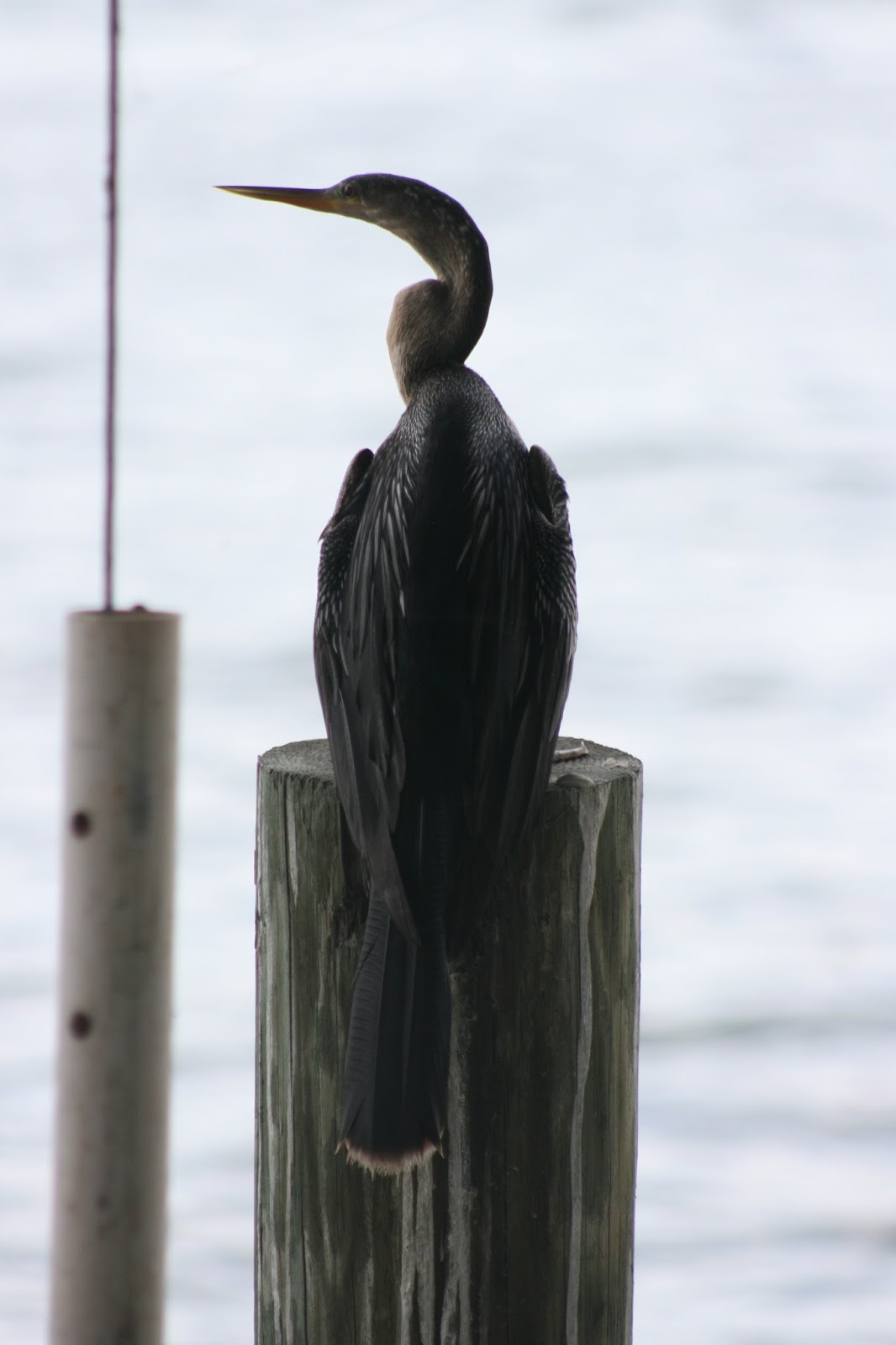
An Anhinga in Florida

2013 Year Birds: 247
Florida Additions:
White Ibis
Anhinga Life Bird

Next Stop: Coastal Georgia!

Thursday, June 20, 2013

Black Skimmers

The Black Skimmer.  What an interesting bird.  In many ways so similar to a shore bird, but also so very different.  The Black Skimmer is black, white, and has a long orange and black bill.  Much like every other shorebird, until you get a look at their bill.  They are a strange looking bird.  One that makes you think you are just imagining them, that their long bills and unique behavior are just figments of your imagination.  They are however, very real and very awesome birds.  Connecticut is their most northern limit but there are a few nesting records here in the state.

Seeing them reminded me of the power of the Unicorn Effect.  When I heard about their being sighted in a near by site.  Being out in nature, provides any number of opportunities to be lost in it.  To be feel connected to it and feel its presence.  The Black Skimmer reminds me that I can reconnect myself to exotic nature in my own backyard.  Richard Louv, in Nature Principle, writes that "Near is the new far" and the Black Skimmer reminds me of this fact and that I re-live this again and again when I go outside!

All About Birds: Black Skimmer Link


All Photos (C) Me

2013 Year List: 227
Black Skimmer (308 Total)

Wednesday, May 29, 2013

Birding in Vacationland

For Memorial Day, I birded one of my favorite states in the Union.  Maine.  I always refer to the Union when I talk about Maine because of its history.  Maine became its own state as part of the Compromise of 1820 to create a balance between the Slave-Holding States and the Free States.  Its motto, Dirigo, means 'I Lead' and lead it did!  But that's the topic of a different blog.  Maine is called Vacationland and there are times that the name fits.  For me, there's always a tension between being on vacation and being a birder on vacation.  I want to get out and see the sights and birds, but then, after a stressful school year, all I want to do is sleep.  Sleeping of course takes time from birding.  The rainy, drizzly weather helped make some decisions for me because it allowed me to wait for better light to see the birds.

Birding Maine was great.  Lots of sounds and old forests to look for birds.  The two best spots I'd recommend include Morse Mountain and the Coastal Maine Botanical Gardens.  These two sites offer great insights and examples of Maine's Ecology and Environments.  Morse Mountain has a rich diversity of habitats for birds from swampy/marsh wetlands to beach/shoreline to dense forest/conifer forest.  The Botanical Gardens also offered a variety of habitats.  Warblers aplenty at the Botanical Gardens as well!  The only thing I'd recommend is more time in Maine!

Links:
Morse Mountain - Link
Coastal Maine Botanical Gardens - Link

Glossy Ibis
Rose-Breasted Grosbeak
Ruby-Throated Hummingbird
A Classic Maine Scene

2013 Year List: 225
Olive-Sided Flycatcher (Lifer)
Blackburian Warbler
Willow Flycatcher
Common Eider

Life List: 308

Tuesday, May 21, 2013

Room to Spare


So this post has been a long time coming.  I've been working for a long time at becoming a better birder, naturalist, and outdoor enthusiast.  For this year, I set the goal of getting my life list up to 300 Birds and my Year list up to 200.  Its been slow going with my list and ebird has been a tremendous help.  Its helped me keep an excellent record of my birds and where I've seen them.  So I am pleased to announced that I've met both Goals.  My Life List stands at 307 and my Year List Stands at 216.

So here's an update of the Birds that got me over the hump:
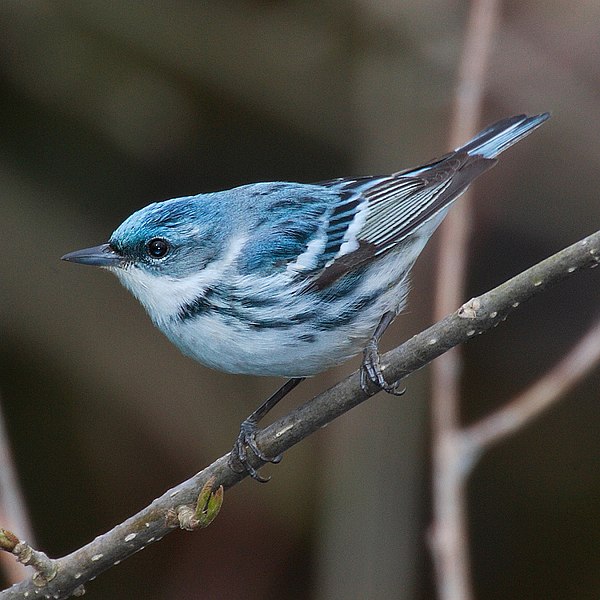
Cerulean Warbler
Veery
White-Eyed Vireo
And all the Texas Birds I got last weekend

File:Dendroica-cerulea-002.jpg
A Cerulean Warbler (C) Mdf
Veery (C) All about Birds - Cornell Lab of Ornithology
File:White-eyed Vireo by Alastair Rae.jpg
White-Eyed Vireo (C) Alastair Rae


Sunday, May 19, 2013

San Antonio Review

So I just returned from a trip to lovely San Antonio Texas.  I visited 3 sites dedicated to birding.  I've already written about the good work being done at the Botanical Gardens.  So I want to focus on 2 other sites.  Warbler Woods (http://warblerwoods.org/) and Mitchell Lakes Audubon Center (http://mitchelllake.audubon.org/).  Both offer an incredible habitat for birds and all sorts of animals.  I had a blast exploring the different habitats around San Antonio and could have gone back for more.  There were countless sites that I want to go back to and see.

Warbler Woods - This site is incredible.  Painted Buntings, Greater Roadrunners, Scissor-Tailed Flycatcher, and Canada Warblers were the biggest highlights of the site.  For the followers of my blog, You will note that both Scissor-Tailed Flycatcher and Canada Warbler were 2 of my Goal Birds for the year.  It was a marvelous site and one that I hope to return to in the future!

Mitchell Lake Audubon Center - This site has a plethora of habitat and is great for shorebirds.  The pictures below are from this site.  My highlight of this spot were getting great shots of the Scissor-Tailed Flycatcher, a Spotted Sandpiper, and an American Golden-Plover.  This was super awesome for me!  A goal Bird, a nemesis bird, and just a beautiful bird!  Time spent at Mitchell  Lake won't be a waste.

This post is short so I can get back outside.  Why don't we all do the same!

 Scissor-Tailed Flycatcher
 Yellow-Headed Blackbird
 Wilson's Phalarope
 American Golden-Plover *Goal Bird*
Hudsonian Godwit

2013 Year List: 199 (1 to go)
Life List: 297 (3 to go!)
Eared Grebe LIFER
American White Pelican LIFER
American Golden-Plover LIFER and GOAL BIRD
Hudsonian Godwit LIFER
Western Sandpiper LIFER
Baird's Sandpiper LIFER
Stilt Sandpiper LIFER
Long-billed Dowitcher LIFER
Wilson's Phalarope LIFER
Franklin's Gull LIFER
Black-chinned Hummingbird LIFER
Curve-billed Thrasher LIFER
Yellow-headed Blackbird LIFER
Inca Dove LIFER
Black-bellied Whistling-Duck LIFER
Western Kingbird LIFER
Common Ground-Dove LIFER
Greater Roadrunner LIFER
Common Nighthawk LIFER and ABA Bird of the Year
Scissor-tailed Flycatcher LIFER and GOAL BIRD
Canada Warbler LIFER and GOAL BIRD
Painted Bunting LIFER
Lesser Goldfinch LIFER
Neotropic Cormorant LIFER
Cave Swallow LIFER
White-winged Dove LIFER