Showing posts with label birding photos. Show all posts

Tuesday, September 23, 2014

Lakes in Georgia

I've been told that there are no native lakes in Georgia.  Almost all the one's you'll encounter are man-made in one way or another.  But as long as they have water, shoreline, and food, birds don't really care if your lake is man-made, accidentally made, or "organic."  Birds are opportunists like we are all are aren't going to pass up a food source just because it wasn't there before... although it may take them a while to find it.

I visited a local lake, Lake Hartwell.  It is managed by the Army Core of Engineers and has a lot of trails, picnic grounds, and water ramps.  Great places to find birds.  My visit there proved that very point.  We were greeted by a great number of birds, Canada Geese, Great Blue Herons, Blue Jays, Mockingbirds, Sanderlings, and other great birds!  I've included a link to the Lake and its grounds, as well as the local rules that must be followed!

Next Time, we'll visit the State Botanical Gardens, until then, Get out and Go Birding!

Links to Lake Hartwell - Link here

A Sanderling on a red shore

Gulf Fritillary

Bird Quiz #4: Post your Guesses in the comments!

Wild Bird Wednesday - Link Here

Tuesday, July 8, 2014

Goshawks in the Forest

At an undisclosed location, I was taken by a birding friend to see a nest.  This wasn't just an ordinary nest.  This was the best of a Northern Goshawk. Northern Goshawks are becoming harder and harder to find in southern New England. For one, they need large tracks of forested land to survive and they are very territorial. As southern New England went through various stages of its recent history, namely Agricultural, Industrial, Urban, and Suburban, our forests were cut and processed to satisfy the different space and energy needs. This meant that the Northern Goshawk had to go elsewhere to get the land and space it needed. Some have returned despite the continuing challenges of forested spaces around the region. 

 My friend was lucky enough to know of a nest and inspired me along for the ride to see the nest and the birds. Approaching the nest is a careful endeavor. Goshawks are territorial about all the creatures in their space and well chase of people and all sorts of birds and animals. We approached carefully. The Goshawks had chased several Pele already and we didn't want to stress the bird and the nest site. We barely made one bird sitting on the nest. After deciding not to stress them out any more, we began to gather to walk out of the forest. Then the other Goshawk returned. We heard it first. Then sawed it flying through ths trees. The Goshawk was circling us. We continued our walk and the Goshawk took to a perch to make sure we left. We honored the request and hoped or visit hadn't stressed the birds too much. 

 Enjoy the pictures. Until the next time, get outside and go birding !  

A Warning about approaching the nest

The Nest

An Angry Parent Goshawk Approaches

After Flying around and Vocalizing, Goshawk Watches us leave


Linking to Wild Bird Wednesday - Link here

Sunday, March 9, 2014

Orchestra Section? This way to the Horns

This weekend at Hammonasset State Park was quite the place to be.  A continuing Snowy Owl was easily seen from the trail but my wife and I were able to see some of the harder to see visitors as well.  We found a a Hermit Thrush while investigating the remains of an owl attack amongst some cedars along with robins thrashing about in the leaf litter and cover.  

There was a fairly huge flock of Horned Larks in an open grass parking lot and usually, one can find Snow Buntings or Lapland Longspurs mixed in there as well.  So in an open grass parking lot, we began the exciting tasking of sorting through dozens and dozens of Horned Larks.  The Snow Buntings were easy to find but the Longspurs took a bit more effort.  This became harder as we noticed that some larks enjoyed taking dirt baths, making them look more sparrow-like.  Eventually, we found a Longspur and a Lapland at that!  We found it by looking for the rufous/red cap that distinguishes it from the Horned Larks but also does not necessarily distinguish it from the ground, but if it wasn't hard, birding wouldn't be half as fun!

The other amazing experience we had at Hammo was with a Horned Grebe that was really fighting the tough waves of against the rocky spit.  Eventually, it couldn't take it anymore and jumped onto the spit.  Right in front of us too!  We got some great shots of the Horned Grebe who was enjoying the opportunity to rest and relax from the stress of the breaking waves.  The Grebe was so tired that it didn't flinch as people walked around it!  Of course, I flinched.  People should be more considerate of our wildlife and environment but that's a whole other post.  In the Meantime, there are many birds who are arriving every day and hopefully we can all get out and enjoy the birds!  Until the next time, get out and go birding!

Can you find the Horned Larks, Snow Buntings, and a Lapland Longspur?
(click for bigger image)

Active Waves pushing around a Horned Grebe

Said Horned Grebe taking a break...

2014 Year Birds: 129
CT: 123
Notable Additions:
King Eider
Lapland Longspur

Friday, February 28, 2014

The Empire Shrikes Back

To many birding puns?  NEVER

During this past trip to Minnesota, we dipped out on seeing a Golden Eagle and a Townsend's Solitaire.  Either would have been a life bird for me.  But we got great looks at a Northern Shrike...


Shrikes are interesting birds as they are fierce predatory song birds.  Northern Shrikes have stark colors that make them great inhabitants of northern territories.  Like most birds, they are great listeners and Northern Shrikes have the capacity to mimic or ape the calls of other song birds to bring them out it the open.  They can grab and catch small mammals and hawk insects in the air.  Versatile hunters make for successful hunters.

The Back of the Northern Shrike

A Profile of the NOSH

The Northern Shrike in Flight with Prey

Seeing the Shrike hunt, kill, and carry off its prey was just awesome.  The sailed across and through brambles of the roadside and just pounced on its prey.  You can't help but be impressed by the small shrike's ability to hunt.  Until the next time, go birding!

Sunday, February 23, 2014

Prairie Home Visits

For the past few days, my wife and I visited southeastern Minnesota.  While we didn't pick any life birds, we did see some awesome birds.  Most people visit Minnesota and go north to see the Sax-Zim Bog, we did not.  While it is a site that we definitely want to go see, we just didn't have the time during this trip.  Hope
fully next time!  We did visit two awesome sites that were definitely worth the visit.  Oxbow Park and Quarry Hill and the Whitewater State Park and Wildlife Management Area.

Oxbow Park yielded some great looks at some Minnesotan Black-Capped Chickadees which are pretty big compared to the Connecticut BCCHs.  We also got a look at some WBNH and a Rusty Blackbird that was hanging out with some sturdy American Robins. Link Here

Whitewater State Park and WMA - This was definitely the most exciting place we stopped at.  Before I write any more, let me give a shout out to the Minnesota State Park Naturalists.  Their attention to our query (about the golden eagle) was answered and they told about atoll the other boss we could see and enjoy as well.  We missed out on the Golden Eagle and Townsend's Solitaire, we did get to see Bald Eagles and some very active Northern Shrikes.  Even the drive to the Whitewater was productive.  We picked up a ton of horned larks, Turkeys, and even got to see an American Kestrel hunting in thesnow covered farm land.
I look forward to the next time we can come back to the Land of 10000 Lakes.  They have done a great job in protecting a lot of their environment  and open farmland.  Link Here.

Until the next time, get outside and go birding!

A Gaggle of Turkeys in Oxbow Park

The Chickadees were huge in Minnesota.

Horned Larks getting a jog in as they search for food

A Juvenile Wild Turkey joining in on the fun of running

2014 Year Birds: 122
Notable Additions:
American Kestrel
Northern Shrike (Subject of our next blog)

Monday, November 25, 2013

Between a Rock and Hard Place

This blog isn't about birds.  Well, not entirely.  Recently the Peabody Museum (Link here) ran a geology hike though New Haven's East Rock Park (Link here) lead by Copeland McClintock, one of their Geologists.  The idea of understanding more of the geology and natural history appeals to me.  While I didn't expect to become an expert after just one walk, I thought that any information would benefit my understanding of the natural world.

Thoughts of a simple passive walk were quickly disspelled by the fact that when I first arrived, articles, clipboards, maps, and colored pencils were shoved into hands.  We were also put to work learning the three different kinds of rocks (sedimentary, igneous, and metamorphic) and then we were quizzed with samples.  McClintock then took us on a whirlwind history tour of the planet and then East Rock.  We were introduced into the Cooling Columns of Basalt and the New Haven Formation of Arkose.  The Triassic New Haven Arkose and the Jurassic Basalt helped us understand how rocks interact and showcase our planet's history.

We also learned to look at and use the tools of a geologist.  Learning how to look at rocks, measure angles of rock intrusions, and how to identify the evidence of glacial activity.  While I am not going to even pretend to think that I could do this on my own, I did enjoy learning how to see the world how a geologist see it.  As a birder, I most often use that lens to see the natural world.  Geologists look at East Rock and see the movement of rock, intrusions of igneous rock, and the evidence of glacial activity.  I enjoyed the Peabody's walk and can't wait to get out and see more of the natural world!

Told you there would be some birds on this one

Cooling Columns of Basalt at East Rock Park

A Geology Station in College Woods

A Sample of the New Haven Formation, mainly Arkose

More Arkose!

Above, a demonstration of a Sill Intrusion

This is an example of a Dyke Intrusion

These are pebbles that have been sheared into the Basalt by a Glacier

Lunar Scars of left by a Glacier and a Pebble


Sunday, October 13, 2013

West Rock, Birds and a Morning Hike

This weekend, I took a hike up a park.  While East Rock is well know to New Haven and Connecticut Birders, West Rock is often forgotten and ignored.  For instance, East Rock has, on ebird(c) 195 species while West Rock sits at 74.  Even the neighboring Edgewood Park also can only boast 102.  But that's how it goes sometime.

So the park was a buzz with birds.  There were lots of birds all over the park.  From the Parking lot to the Rock's Summit, I could hardly take a step without seeing some birds.  Chickadees and Vireos were all over the place.  Jays popped up all over the place.  Nuthatches and Woodpeckers were feasting.  Warblers were singing and kissing the air.  The famous residents of West Rock are Ravens and Peregrine Falcons weren't anywhere to be found.  Perhaps migration has helped them along.  There also Vultures soaring about.  I also found some fox droppings on the trail.  The Park was definitely a haven for all things nature and birds and I can't wait to get back.

While some parks get ignored, it seems that city parks in New Haven are getting more and more attention.  Many people are starting to work harder and harder towards making these parks better and more accessible.  Introducing more native plants and more landscaping with bird-habitat.  It seems that at one time or another, every park in New Haven undergoes positive changes and new plantings, I can't wait to see what they'll do next and what birds will pop up!  I think I might adopt a local park to bird once a week to try and boost the local bird list and appreciate more of New Haven's local parks.  Any feedback on this idea would be appreciated.

Black-Capped Chickadee

Hairy Woodpecker

A Dragonfly

Not West Rock, But a local pond with a Female Northern Shoveler and Euraisan Wigeon!

2013 Year List: 265
Eurasian Wigeon

Monday, October 7, 2013

The World's Scariest Grebe!

Why is the Pied-Billed Grebe the world's scariest?  Because it gives everyone the Pee-Bee-Gee-Bee's!!! While I hate explaining jokes, the bird code of the Pied-Billed Grebe is PBGB which sounds like Hee-Bee-Gee-Bee...  I know, I know, I am shaking my own head.

This weekend, I was lucky enough to find a Juvenile Pied-Billed Grebe this weekend.  This can be a tricky and special bird to find in CT.  It has been listed as a threatened nesting bird and endangered bird in Connecticut.  Seeing one is a great day on any birding walk.  They prefer freshwater ponds and like to quickly dive out of the way when they sense danger.  This makes them hard birds to see and really appreciate.  I guess you could almost say that it is a ghoulish Grebe appearing and disappearing!  I know it is a bit of a stretch, but take a moment the next time to you and enjoy the PBGB wherever you see it!

A Juvenile PBGB in Mondo Pond in Milford

Another view of the PBGB

A Far off PBGB...

2013 Year List: 264 (Migration is beginning to wane)

More info on the Pied-Billed Grebe - Link

Monday, July 29, 2013

Birding a New Park

I had the pleasure today of birding a new park.  I don't mean that it was a new park for me, but a new park.  The land had once been a private airport, a developer's future project, and finally, a couple of soccer fields, a coastal forest, 2 ponds, and a few trails.  The park also benefits from being right against Hammonasset State Park which is an extremely important IBA in Connecticut and Southern New England.  This makes this new park a vital habitat.  I went to visit the park after a quick walk around Hammonasset.  At Hammo, I was able to grab a few great shots of Terns, Butterflies, and other birds.  But then I moved on to another park.

The opening of the new park was not the easiest process.  As I walked the park and heard from several people, many mentioned how difficult it was to secure the land.  The land was along Route 1, a major state route along the CT shore, and definitely was prime real estate.  When the land first became available, people wanted to make it a park, but then it was bought by a developer.  After zoning commissions and issues with the developer, it was the recession of 2008 that killed the prospects of the developer turning the land into condos.  While the Recession made developing less desirable, it took an alliance of Parks people, Conservationists, and towns people to make the park a reality.  Along with the natural spaces, there are plenty of people spaces as well.  While some will complain about the balance, I do appreciate any effort to get people outside as a good effort.  This is proof that good environments can be made to be friendly to all sorts of life.  I am also excited to visit this park to see how it develops and how the people and animals use.  So far, its been a success, 1 visit and 1 life bird, a solitary sandpiper!  Definitely enough to keep me going back for more!

Common Tern Adult and Juvenile at Hammonasset State Park
Eastern Black Swallowtail
Two Glossy Ibises and a Little Blue Heron
A Female Seaside Dragonlet
Spice Bush Swallowtail
A Solitary Sandpiper, Can you find it?

2013 Year List: 236
Solitary Sandpiper, latest Life Bird

Wednesday, May 29, 2013

Birding in Vacationland

For Memorial Day, I birded one of my favorite states in the Union.  Maine.  I always refer to the Union when I talk about Maine because of its history.  Maine became its own state as part of the Compromise of 1820 to create a balance between the Slave-Holding States and the Free States.  Its motto, Dirigo, means 'I Lead' and lead it did!  But that's the topic of a different blog.  Maine is called Vacationland and there are times that the name fits.  For me, there's always a tension between being on vacation and being a birder on vacation.  I want to get out and see the sights and birds, but then, after a stressful school year, all I want to do is sleep.  Sleeping of course takes time from birding.  The rainy, drizzly weather helped make some decisions for me because it allowed me to wait for better light to see the birds.

Birding Maine was great.  Lots of sounds and old forests to look for birds.  The two best spots I'd recommend include Morse Mountain and the Coastal Maine Botanical Gardens.  These two sites offer great insights and examples of Maine's Ecology and Environments.  Morse Mountain has a rich diversity of habitats for birds from swampy/marsh wetlands to beach/shoreline to dense forest/conifer forest.  The Botanical Gardens also offered a variety of habitats.  Warblers aplenty at the Botanical Gardens as well!  The only thing I'd recommend is more time in Maine!

Links:
Morse Mountain - Link
Coastal Maine Botanical Gardens - Link

Glossy Ibis
Rose-Breasted Grosbeak
Ruby-Throated Hummingbird
A Classic Maine Scene

2013 Year List: 225
Olive-Sided Flycatcher (Lifer)
Blackburian Warbler
Willow Flycatcher
Common Eider

Life List: 308

Friday, May 24, 2013

Learning to Teach

This past weekend marked the first time I lead people on a bird walk.  I hadn't really done it before and I was quite nervous.  What if there were no birds?  What if it rained?  What if no one showed?  Well, all those fears aside, I caught a couple of lucky breaks.  Weather was good, people showed, and even better, the birds showed!  It was a quick one hour walk around a local state park but we got some impressive birds.  Wood Thrush, Prairie Warbler, Black-and-White Warblers were all out and calling.  It was great to see.  But the thing I appreciated the most was that throughout the walk, the other people on the walk were excited and enthralled by every bird we saw.  Cardinals, Downy Woodpeckers, Tufted Titmice were enchanting to them and helped me appreciate how much birding can connect us to nature.  I know that I'd like to lead more walks and I hope I get the opportunity soon!  In the mean time, enjoy some of my recent photos!

Lovely Shorebirds
A Tern
Terns and Turnstones
Fighting Orioles

Tuesday, May 21, 2013

Room to Spare


So this post has been a long time coming.  I've been working for a long time at becoming a better birder, naturalist, and outdoor enthusiast.  For this year, I set the goal of getting my life list up to 300 Birds and my Year list up to 200.  Its been slow going with my list and ebird has been a tremendous help.  Its helped me keep an excellent record of my birds and where I've seen them.  So I am pleased to announced that I've met both Goals.  My Life List stands at 307 and my Year List Stands at 216.

So here's an update of the Birds that got me over the hump:
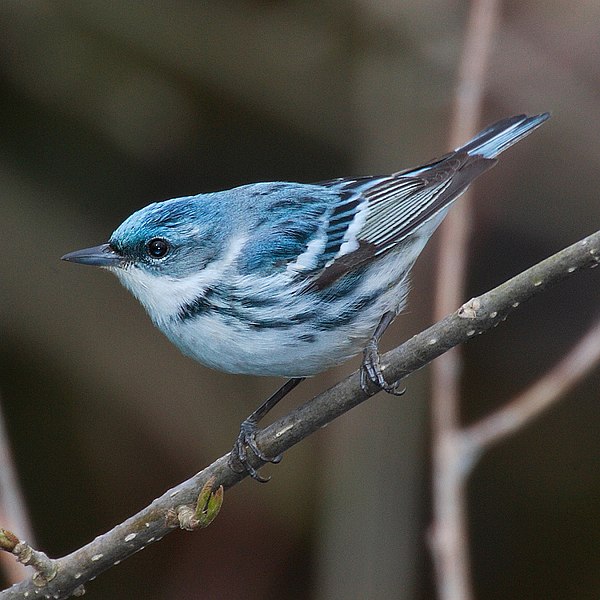
Cerulean Warbler
Veery
White-Eyed Vireo
And all the Texas Birds I got last weekend

File:Dendroica-cerulea-002.jpg
A Cerulean Warbler (C) Mdf
Veery (C) All about Birds - Cornell Lab of Ornithology
File:White-eyed Vireo by Alastair Rae.jpg
White-Eyed Vireo (C) Alastair Rae